“There’s going to be a new sheriff in town, and this sheriff loves tariffs,” said Steve Lamar, President and CEO of the American Apparel and Footwear Association (AAFA). “It’s what a lot of people in the industry have been modeling for, bracing for or planning around for some time now.”
President Joe Biden recently announced his decision to uphold tariffs originally imposed by Trump, on over $300 billion worth of Chinese imports. These tariffs, instituted under Section 301, target various Chinese goods, including finished textiles and apparel.
The decision to maintain these tariffs follows a four-year review of Section 301 highlighting the importance of supply chain resilience and the need for brands to address vulnerabilities, stat. It’s no secret that China's manufacturing prowess is a central pillar of global trade.
In fact, according to Statista, “in March of 2024, approximately three billion meters of clothing fabric were produced in China. The average monthly production of textile was around 2.72 billion meters in the past one year.”
And while those are huge numbers, growing concerns over geopolitical tensions, supply chain vulnerabilities, and sustainability imperatives are prompting companies to reassess their entire ecosystem.
But it’s not just China.
Covid, logistics, supply chain, and sustainability issues have also played significant roles in reshaping the landscape of the apparel industry, driving a shift towards decentralizing production locations.
As chaos caused by the pandemic exposed the risks of overreliance on centralized manufacturing hubs, more and more companies have been compelled to diversify their production locations and explore alternative sourcing options to future-proof their success in the face of global disruptions.
Charming Trim’s response
This is precisely why we at Charming aggressively (and purposefully) expanded our production locations from China and Hong Kong to include Bangladesh, Vietnam, Turkey, Pakistan, France, India, Sri Lanka, Guatemala, and Mexico—as well as secured joint manufacturing partners in the USA, Honduras, Jordan, and Dubai. This helps minimize risk and ensures customers have options to remain agile and stay competitive.
Alas, new locations are not all brands need to consider—sustainability mandates are now also a critical part of the equation. Take for example, the European Union’s (EU) introduction of Digital Product Passports (DPPs), a transparency and traceability tool that provides information about a product’s origin, and environmental and social impact, from source to sale and beyond. DPPs are set to revolutionize—but also greatly disrupt—supply chains worldwide if steps are not taken now to prepare.
But that’s not all.
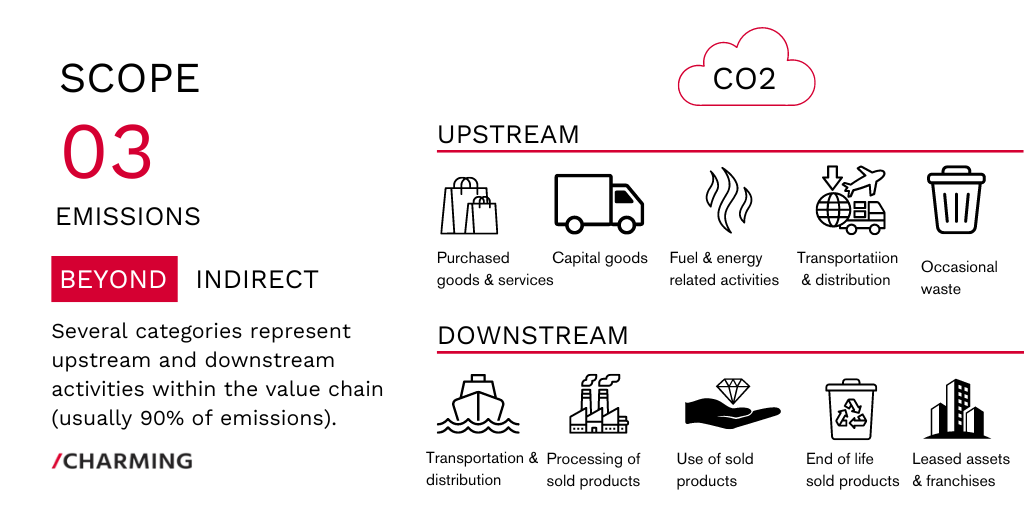
Mandates aside, many eco-forward brands are also investing in systems like In-Plant Printing (IPP) a powerful on-site printing system that gives you the freedom and control to print care labels, price tickets, QR codes, and barcode stickers (regardless of whether they are RFID encoded or straight data) on-site. IPP eliminates astronomical fees and carbon associated with emergency air freight and helps minimize Scope 3 emissions (greenhouse gasses that an organization indirectly produces).
As the industry navigates these changes, it’s important to note that diversification, flexibility, agility, and embracing new technology and ways of working will be key in creating supply chain resilience.
To learn more about Charming.DIGI, Charming’s digital product passport solution, don’t hesitate to reach out to our team. We’re excited to get started.
Editor Note: This content was updated on October 1, 2024.


.png) CHARMING STAFF
CHARMING STAFF


.png?width=30&name=CT%20SLASH%20(1).png) CHARMING STAFF : Apr 24, 2025, 12:00:00 AM
CHARMING STAFF : Apr 24, 2025, 12:00:00 AM

.png?width=30&name=rich%20ringeisen%20-%20Edited%20(1).png) Rich Ringeisen
Rich Ringeisen