You can think of the digital product passport (DPP) as a digital filing cabinet — it safely stores the most important product data for individual products or product batches moving through the supply chain.
However, using a DPP is about more than collecting data. The digital product passport is driving change for the circular economy by bringing manufacturers and consumers together. Gone are the days of wondering where that pair of jeans came from and where it ended up.
Learn the why and how of data collection for DPP to see why it's time to start tracking your products.
Why is it time for a DPP?
The European Union started rolling out new regulations in 2024, requiring nearly all products sold throughout the EU to feature a digital product passport by 2027. In ten years, we estimate that every consumer product will have a digital ID.
Global manufacturers must meet the new standards to ensure their products can be bought and sold in Europe.
Product tracking for transparency and accountability
Brands are not currently required to track their product life cycles. With a digital product passport, manufacturing and supply chains provide product data on provenance and performance to provide a circular view of their products.
Consumers can make a more informed choice on which product to buy when they know the full product journey.
Increased product lifespan and reuse
New clothes aren't the only garments that benefit from DPPs – used or "pre-loved" product data documents the details of current and past owners, which is especially helpful for long-lasting products that can be resold. Information on repairs, resales, reuse, and recycling keeps the DPP up-to-date.
Compliance with regulations and standards
Upcoming regulations will outline all products' presentation, labels, and value regulations. Digital product passports can display this information to ensure products meet all regulations.
Types of data collected & what you can do with it
1. Product information
Basic product information like the product name, batch number, serial number, and manufacturing data is the most common data collected on a digital product passport. This information tells the product's story.
2. Usage data
Wash care, proper repair methods, and performance classes are common types of usage data. Also known as event data, this information can inform users how to repair or recycle their garments.
3. Environmental impact
Green claims are more reliable with verifiable data. The manufacturer's carbon footprint, distribution process, and recyclability, reuse, re-fill, and resale data are included. Detailing product lifecycles promotes sustainability and directly engages consumers in the circular economy.
4. Customer feedback and preferences
Customers can also upload information to their DPPs. Feedback is provided by scanning the QR code to access digital channels like dedicated apps or websites to interact with the brand. Customer surveys and purchase history create a customer profile for targeted marketing and an optimal customer experience.
5. Supply chain logistics data
Consumers aren't the only ones who benefit from DPPs. Details of the garment, textile, dyeing, printing manufacturers, and lifecycle journey give stakeholders insight to optimize their processes as products move through the supply chain.
Data collection methods
The most important step is getting essential data onto your brand's digital product passport. So, how is it done?
The basic structure of a DPP includes data flows to organize every data type. Marketing assets, product imagery, and product, supply chain, and purchase order data comprise a consumer-facing digital product passport.
Behind the scenes, manufacturers use Product Information Management (PIM) systems and other platforms to organize these data points to create a hub that populates the DPP interface.
Simply navigate the customizable passport builder constructed by your DPP supplier to provide consumers with the perfect digital experience. The interface lists the key data points about your product and your brand's story.
Keep in mind that data should follow a single data language to ensure consumers and stakeholders can easily read and understand the data.
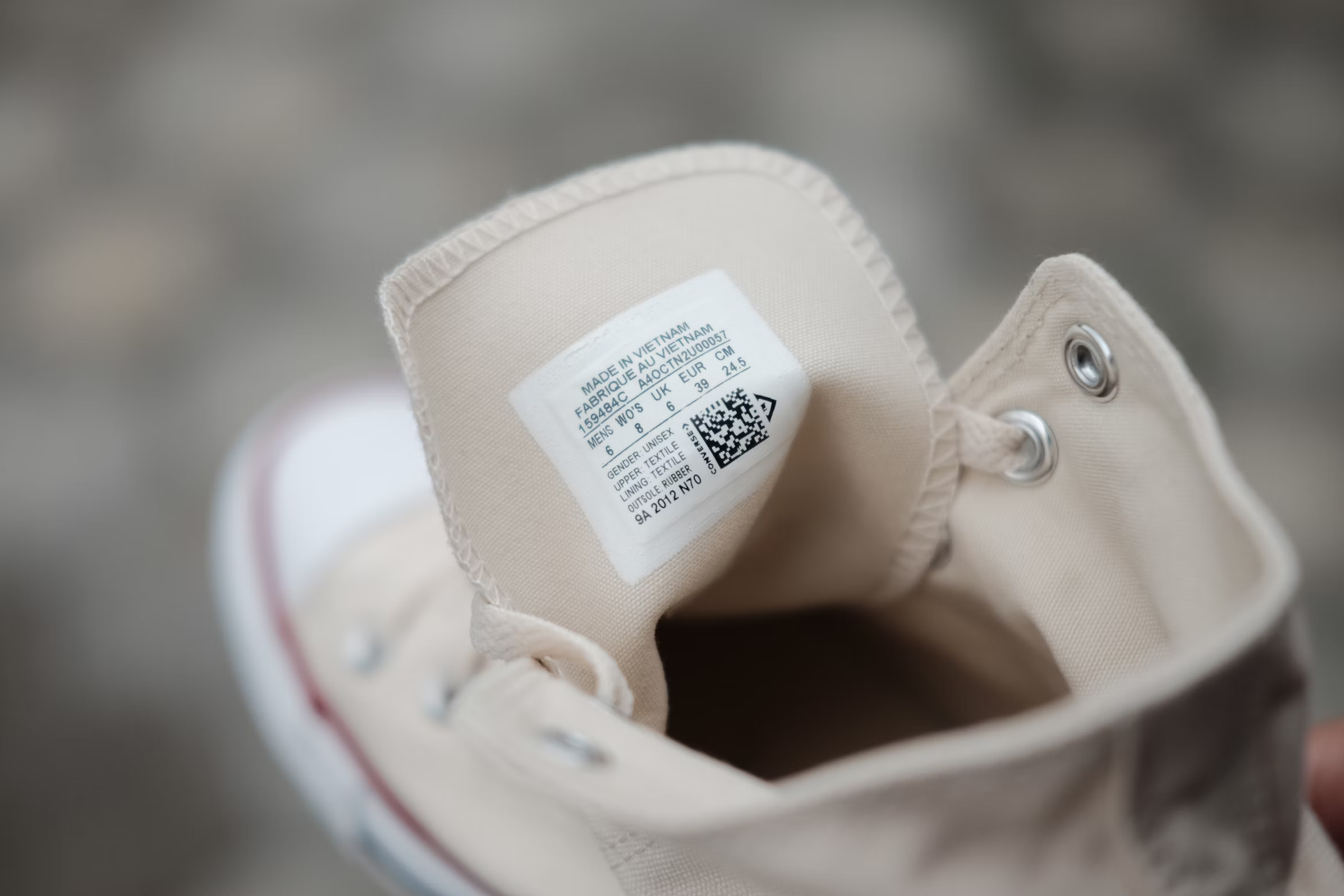
The last step is to generate QR codes, NFC tags, or RFID tags with the help of your trusted label supplier – Charming Trim – to integrate seamlessly into your product designs.
Upgrade your data collection with Charming Trim
Europe is leading the way, but the digital product passport will soon become a global standard. Don't get left behind — invest in DPPs for your products now.
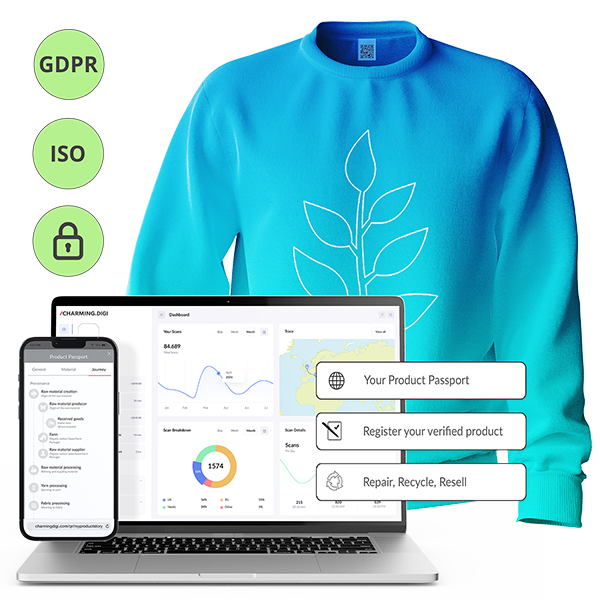
Charming Trim's Charming.Digi, powered by TAPPR, details a product's lifecycle -– from gathering the raw materials to disposal using a single QR code or NFC tag.
Request a demo to learn how to keep up with changing sustainability regulations.

.png) Andy Van Duyse
Andy Van Duyse

 Neil Greenhalgh : Jul 1, 2024, 12:00:00 AM
.png?width=30&name=Untitled%20design%20(16).png) Andy Van Duyse
Andy Van Duyse-1.png)