Is your manufacturing process slow, inefficient, and a bit of a budget drain? You’re in luck. Many manufacturers turn to RFID technology to solve those common challenges.
Whether you are looking to simplify inventory management, improve material tracking, or fix production problems with ease, RFID can help. In this post, we break down 6 ways RFID can improve your manufacturing process so you can achieve your goals.
What is RFID?
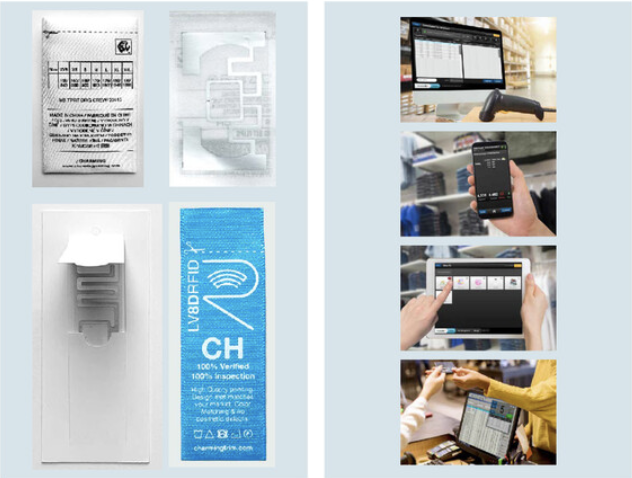
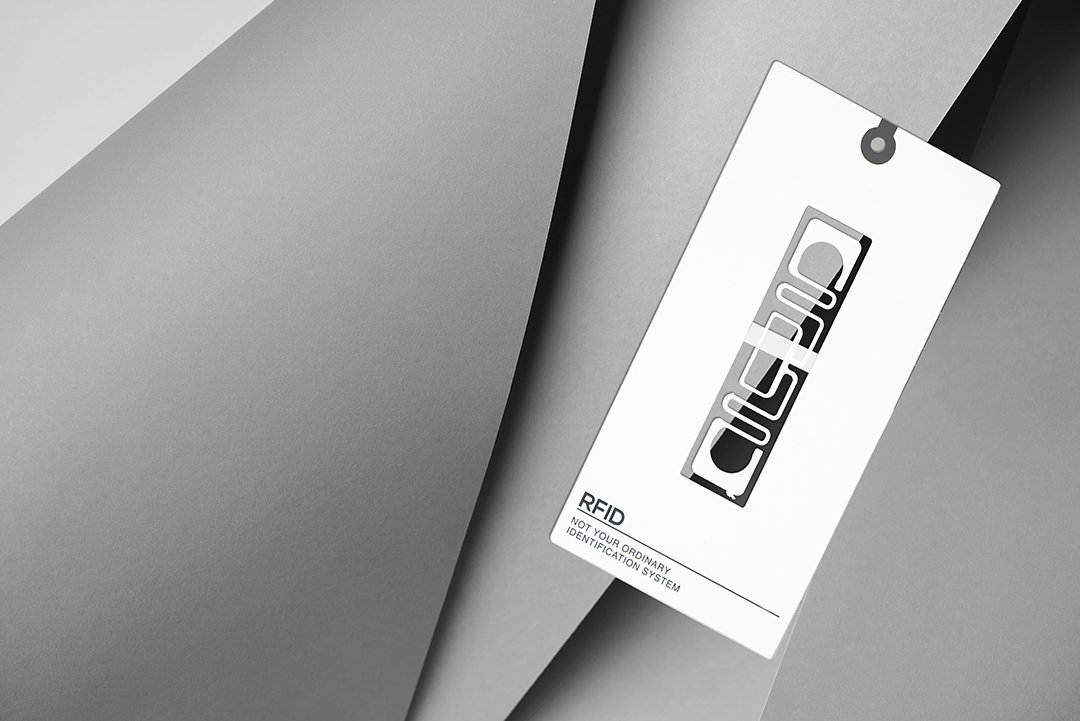
Radio Frequency Identification (RFID) is a wireless technology that is composed of four parts — a tag, reader, antenna, and software — and is affixed to clothing during manufacturing with hang tags or labels. This innovative technology is comparable to barcodes without optical scanning. The best part? RFID readers do not require direct line of site to scan the RFID tags or labels as do barcode readers
The unique information stored on RFID tags can be accessed through radio waves, allowing authorized devices to read and write data to the tag. This information typically includes:
- Electronic Product Codes (EPC)
- The same information that is on the Barcode UPC/GTIN, but with a unique serial number
- Manufacturing dates and locations
- Other relevant data
All of this is stored in a small microchip embedded in the tag, which can communicate with RFID readers and software to retrieve and update information as needed.
6 ways RFID can improve your manufacturing processes
Now that you know the basics of RFID technology, let’s dive into the practical applications. Here are 6 ways radio frequency identification technology can improve your manufacturing processes.
1. Traceability
RFID can first improve the tracking and documentation of items in the supply chain and provide historical data on bulk products, such as cut fabric, used in production. Traceability programs can help verify product movement throughout the supply chain to authenticate garments, comply with industry regulations, and reduce waste for improved sustainability.
2. Inventory management
RFID technology is easily attached to garments during manufacturing processes to monitor inventory. Items are tracked so retailers can keep an eye on their location and status, know how many items remain or have been sold, and reduce the risk of loss as well as restocking. In fact, not having items on the sales floor is a top reason for the retail sales loss today.
3. Supply chain visibility
One of the most significant ways RFID can improve your manufacturing processes is by improving supply chain visibility (SCV). Tracking garments from the supplier to the customer can ensure procedures remain compliant with access to the item’s history data, improve customer service by providing shipment updates, and document supply coordination to keep everyone in the loop.
4. Optimized route planning
Radio frequency identification tags not only make it easier to track raw materials, but they also make route planning easier. Real-time data collection can be used to optimize delivery routes by helping supply chain managers consider traffic and weather conditions to make transportation more efficient and cost-effective.
5. Faster production
Real-time tracking with RFID makes locating raw materials for production easier as they are pulled for a production bill of materials (BOM). It also makes inventory easier. With RFID, garment manufacturers can find all the needed raw materials faster, saving time and money. Easily locating materials is essential for inventory and replenishment in the garment manufacturing process.
6. Recycling
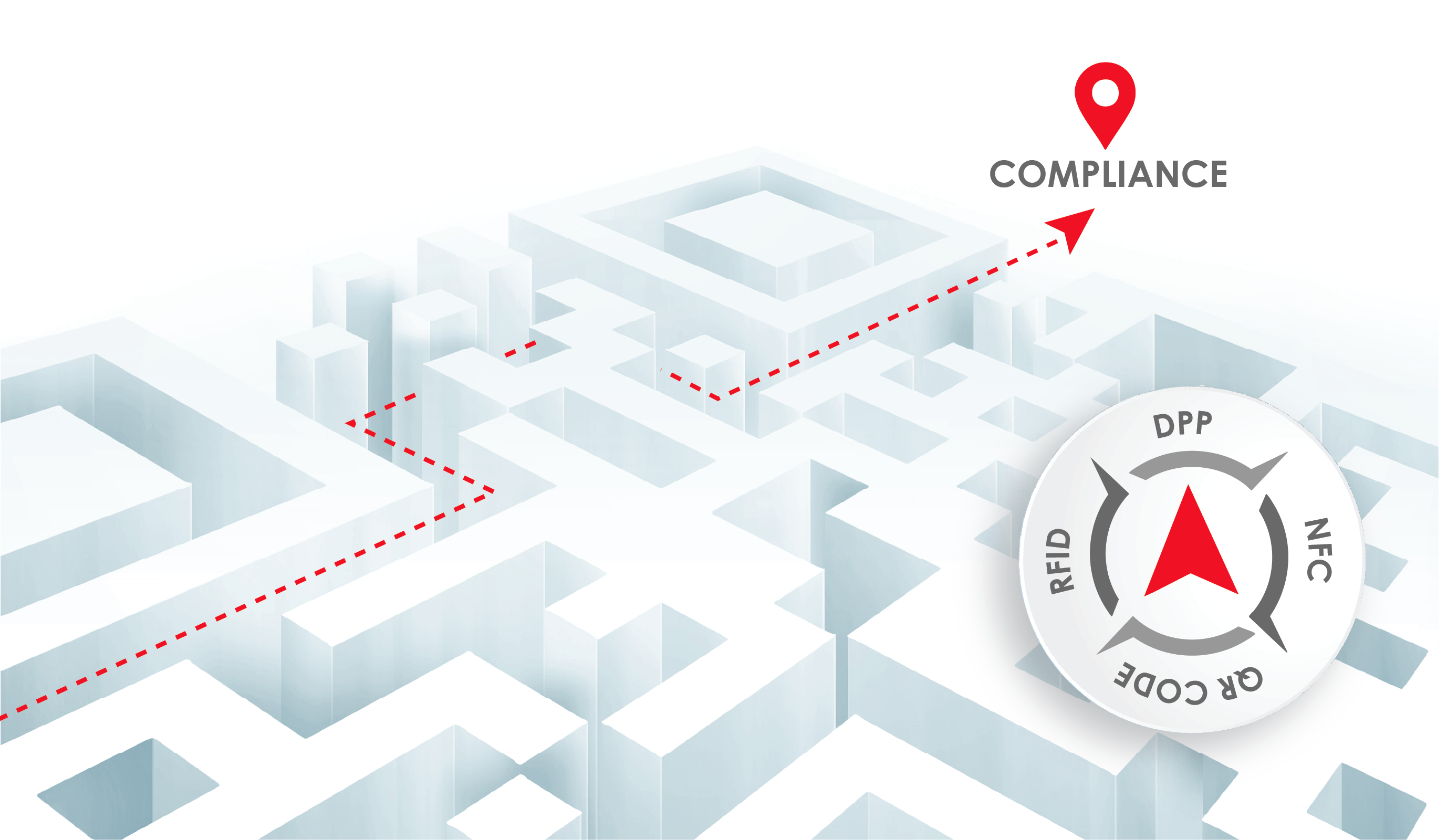
RFID technology optimizes recycling processes by properly identifying, sorting, and processing materials. RFID-enabled recycling also helps create digital product passports, like our Charming.Digi, which conveniently records their origin, composition, and processing history. The improved transparency and accountability improve waste management and closed-loop production systems.
Transforming your operations with RFID solutions from Charming Trim and Truecount Software
At Charming Trim, we specialize in developing innovative RFID labels tailored to your supply chain and retail needs. Our RFID tags and Truecount software are designed to work seamlessly with your processes, improving the efficiency and quality of your supply chain and retail business with less labor and greater accuracy. Do more with less with RFID and Truecount today!
To learn more, schedule your RFID consultation today. We’ll help create customized RFID solutions to optimize your manufacturing processes and drive business growth.


.png) Rich Ringeisen
Rich Ringeisen
.png?width=30&name=rich%20ringeisen%20-%20Edited%20(1).png) Rich Ringeisen : Jan 31, 2025, 12:00:00 AM
Rich Ringeisen : Jan 31, 2025, 12:00:00 AM