In today’s fast-paced digital world, it can be challenging to determine which technologies are worth the investment. One innovation your company shouldn’t overlook is digital labeling. This technology is transforming how brands, manufacturers, and retailers manage products and engage with customers.
Digital labeling combines physical product labels with digital technologies to offer enhanced functionality, detailed information, and interactive features. The four most widespread digital label technologies are Radio Frequency Identification (RFID-UHF), digital product passports (DPP), Quick Response (QR) codes, and Near Field Communication (NFC-RFID) codes.
Below, we’ll explore these technologies and their primary benefits.
Radio-frequency identification (RFID-UHF)
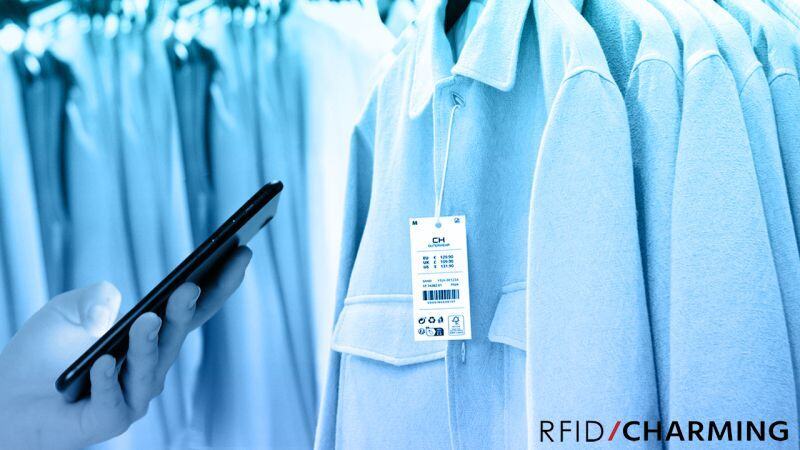
What it is: RFID is a wireless technology that uses electromagnetic fields to identify and track tags attached to objects. Unlike barcodes, RFID tags do not require direct line-of-sight scanning, making data collection faster and more efficient.
The benefits:
- Provides real-time inventory tracking
- Achieves 99.99% inventory accuracy
- Increases inventory counts by nearly 6000%
- Reduces overstocks and stockouts
The impact: Enhancing inventory accuracy with RFID can boost sales by 4-8% while reducing costly inventory distortions (overstocking and stockouts) that currently cost the retail industry $1.8 trillion annually.
Digital product passport (DPP)
What it is: A digital product passport (DPP) is a digital record that stores comprehensive details about a product throughout its lifecycle. It includes information on product origin, materials, manufacturing processes, sustainability impact, and disposal or recycling instructions.
The benefits:
- Enhanced transparency and supports regulatory compliance
- Can assist in authenticating a product
- Increases brand trust and consumer engagement
The impact: Increasing transparency with DPPs keeps your brand aligned with evolving regulations and consumer values. A study found that over one-third of consumers choose brands based on their sustainability efforts, while 28% have stopped purchasing from those that fail to meet their expectations.
Quick response (QR) codes
What it is: A QR code is a two-dimensional barcode that stores information in a matrix of black and white squares, enabling quick and easy access to digital content via smartphones or scanners.
The benefits:
- Cost-effective and easy to implement direct marketing
- Improves consumer engagement and communication
- Seamless way to access a DPP
The impact: QR codes provide a cost-effective marketing solution with high ROI potential. Products featuring connected QR codes achieve an average 14% scan rate—vastly outperforming traditional digital advertising campaigns, which average a 0.01% click-through rate.
Near field communication (RFID-NFC)
What it is: NFC is a short-range wireless RFID technology that enables secure connections and interactive experiences. When an NFC tag is embedded in a label, consumers can simply tap their smartphones to access engaging digital content.
The benefits:
- Enables seamless customizable experiences for consumers
- Provides product authentication
- Strengthens brand loyalty and provides a premium product experience
The impact: NFC technology lets your company leverage a versatile digital label for marketing and seamless purchases. With smartphone accessibility expanding, the global NFC market is set to grow from $21.69 billion in 2024 to $30.55 billion by 2029, creating a prime opportunity to boost engagement and sales.
Using digital labels
Digital labeling isn't just about keeping up with technology — it's about staying ahead of customer expectations. As consumers demand more transparency and convenience, these digital solutions become increasingly crucial for business success.
Want to learn how digital labeling can transform your business? Download our comprehensive guide and let our team show you how these technologies can work for you.

.png) Rich Ringeisen
Rich Ringeisen
.png?width=30&name=rich%20ringeisen%20-%20Edited%20(1).png) Rich Ringeisen : May 1, 2025, 12:00:00 AM
Rich Ringeisen : May 1, 2025, 12:00:00 AM
.png?width=30&name=CT%20SLASH%20(1).png) CHARMING STAFF
CHARMING STAFF