Over the last few years, transparency rules have been showing up all over the world, and now they're locking into place.
The EU's Ecodesign for Sustainable Products Regulation (ESPR) is the big one. It names textiles as a priority and starts applying on July 19, 2026, with the textile-specific details expected to follow around 2027. Closer to home, California passed the Responsible Textile Recovery Act (SB 707), the first U.S. law that makes apparel and textile producers handle what happens to their products at end of life.
The two rules aren't identical. The EU's ESPR will flat-out require a digital product passport (DPP) for textiles. California's law doesn't name a DPP, but it asks for the same kind of fiber and product data, so a DPP turns out to be the easy way to keep it all in one place.
A DPP is just a way to attach product info to a garment so customers, retailers, and recyclers can pull it up, but for small brands, compliance with DPP and adjacent policies can feel out of reach.
The good news is you don't need a custom platform or a team of developers. A DPP that checks the boxes and helps your customers is well within reach for a small brand.
Here's how a smaller apparel brand can build a DPP program that grows with them, without breaking the bank.
Start with what you already have
A DPP is built on data, and most small brands already collect more product data than they think. Fabric specs, care instructions, country of origin, supplier records; it all lives somewhere, even if that somewhere is a folder on someone's desktop.
The first step is to pull it all into one place. Check that it's accurate, then put it somewhere your team can get to. The goal here is a setup that's clear and easy to reach, even if it stays simple.
Once your data is in a cleaner spot, you can find the gaps. Maybe you have fabric content but not the mill name, or care instructions but nothing on recycling. The EU's rules will ask for things like fiber composition, where the product was made, how long it should last, and how to repair or recycle it. California's law leans on fiber and material data too. Line up what the rules want against what you've got, and you've got your to-do list.
Pick one product line to test
Trying to roll out DPPs across every product line at once is a mess. Pick one line, run it through the whole process, and you'll save a lot of time and money.
Go with something you make steadily, like a core tee or a signature jacket. Build the DPP for that one item, work out the kinks, then grow from there.
This lets you see what customers actually scan for, what your suppliers can hand over, and what your label budget really looks like. It also gives you a working example to show retailers and partners.
And you've got time. The EU's DPP rules roll out in stages, not all at once. The ESPR fully applies on July 19, 2026, the textile-specific rules are expected around 2027, and a required DPP for textiles likely won't land before 2028. So you don't need a spotless DPP tomorrow. For the full rollout schedule, check out this article.
Lean on partners instead of building in-house
A lot of brands assume they have to build every piece of a DPP themselves. They don't. There are whole companies set up to take this load off brands like yours.
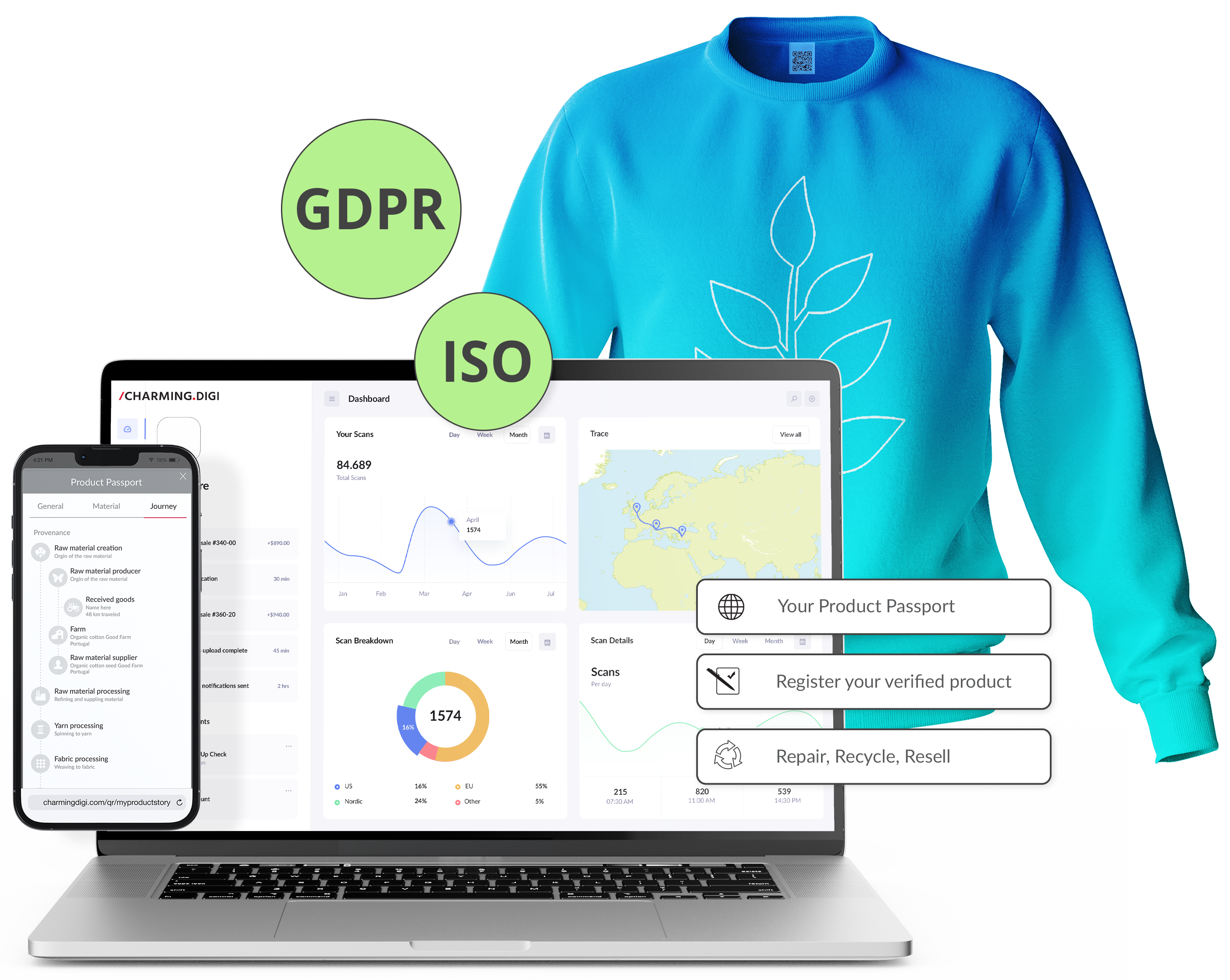
At Charming Trim, we teamed up with Tappr to create CHARMING.DIGI, so we can give our customers every piece of the DPP. We work with brands of all sizes and build programs that fit how they already run, including the physical label, the digital link, and the data flow behind it.
If you already work with a manufacturer or a fulfillment partner, ask them what they support. You might be closer to a working DPP than you think.
Ready to start?
A DPP can sound intimidating, but a small apparel brand can pull it off with three things: a database of product data, a digital way to connect with customers, and a partner to bring that connection into the physical world.
If you're a smaller brand thinking about where to begin, reach out to our team at Charming. We'll help you map out a plan that fits your size, your timeline, and your budget.

 Neil Greenhalgh

.png?width=30&name=rich%20ringeisen%20-%20Edited%20(1).png) Rich Ringeisen : Dec 14, 2021, 12:00:00 AM
Rich Ringeisen : Dec 14, 2021, 12:00:00 AM

.png?width=30&name=CT%20SLASH%20(1).png) CHARMING STAFF
CHARMING STAFF
.png?width=30&name=Untitled%20design%20(16).png) Andy Van Duyse
Andy Van Duyse