While 2020 and 2021 were certainly years of unknowns, one thing is certain: online shopping is here to stay. In 2021, over 46% of consumers reported feeling uncomfortable shopping in-person — and the share of online shoppers has only increased since then. As of this year, 41% of Americans shop online each week.
But as online shopping has grown in popularity, a slew of new problems have emerged alongside. Most significantly: the increase of returned merchandise.
The National Retail Federation published a report on merchandise returns, detailing that $743 billion dollars of goods were returned in 2023. With such significant numbers, it’s a must that brands develop a clear and sustainable return policy and process.
The importance of a clear return process
Before eCommerce became a norm, retailers didn’t need to worry too much about return policies. Small fractions of buyers were coming from the Internet, so bulk returns weren’t a concern.
But as online shopping has grown in popularity, so has the need for a defined, easy, and sustainable return process. When brands skip out on defining their return policy and process, their garments go to waste—literally.
Many companies lack the technology to handle differences in return quality — a return without a tag should be handled differently than a garment with a hole in it. A sad retail truth is that, often, it’s more profitable for items to be sold to discounters. As a result, garments are shipped, driven, and flown at an alarming rate (or even burned if they can’t be resold).
Retailers miss out on opportunities for profit and harm the environment simultaneously when they don’t develop a sustainable return strategy.
It’s not just brands who experience return discontent — it’s shoppers as well
As online shopping has taken the world by storm, consumer priorities have shifted. In 2024, 90% of customers value a good return policy. And of that majority, 43% say the return policy of a business is very important to them
Why is that? Are consumers getting clothes they didn’t want in the mail and needing to make constant returns?
Not exactly.
Consumers intentionally order multiple variations of an item (like colors or sizes) and return those that don’t fit well. According to a 2021 study, 19% of consumers order variations of items with the intention to return most of them.
That makes a clear policy a necessity. (Not to mention — planning for this pattern can be difficult. Brands need to get comfortable sketching in returns into their product ordering and forecasts).
Here’s what customers are looking for in a return policy:
- No additional cost for returns
- In-person return options — 79% of consumers prefer in-person returns over mail-in
- Receipt-free
- Long time frame
- Clear (and ideally, forgiving) conditions for returns
- Easy & clear terminology
Amazon and Kohl’s are leading the way for great return policies, as Amazon returns are now accepted at all Kohl’s stores. Not only does this help Amazon consumers, but it helps Kohl’s generate more in-store traffic.
And it’s not just Amazon and Kohl’s who are ahead of the game here. This list of impressive return policies shows brands who accept receipt-free, year-long, no-questions-asked returns. At first glance, it seems like a liability, but as consumers continue to value returns, you’ll realize flexible return policies can increase purchase opportunities in the future.
How Charming Trim can help communicate your return policy
As you head into 2025, we recommend taking a hard look at your brand’s return policy. Assess your competitors’ policies, too, and see if there's an opportunity to gain advantage by making it easier for your consumers to send in unwanted garments.
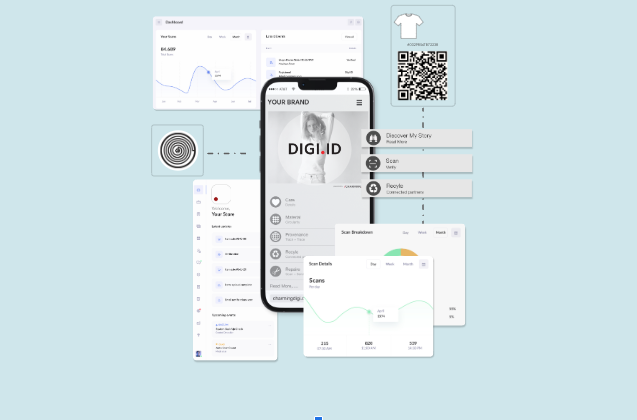
Once you’ve adjusted your policy, the next step is communicating it with your audience. We recommend adding it directly to your digital product passport. Rich Ringeisen, Charming’s President, shed some light on how a DPP can make return policies easy.
“With nothing more than a QR code and an easy registration option included in that address, the consumer can easily process a return without a receipt,” Rich said. “It all depends on how you set up the information and services in your DPP for all five ‘RE’s: REturn, REpair, REcycle, REsell, and REpeat (the purchase.”
To get started on building your DPP — or to learn more about adding a return policy — reach out to our team of experts today.

.png) CHARMING STAFF
CHARMING STAFF


.png?width=30&name=CT%20SLASH%20(1).png) CHARMING STAFF : Jul 26, 2021, 12:00:00 AM
CHARMING STAFF : Jul 26, 2021, 12:00:00 AM
.png)
.png?width=30&name=Untitled%20design%20(16).png) Andy Van Duyse
Andy Van Duyse